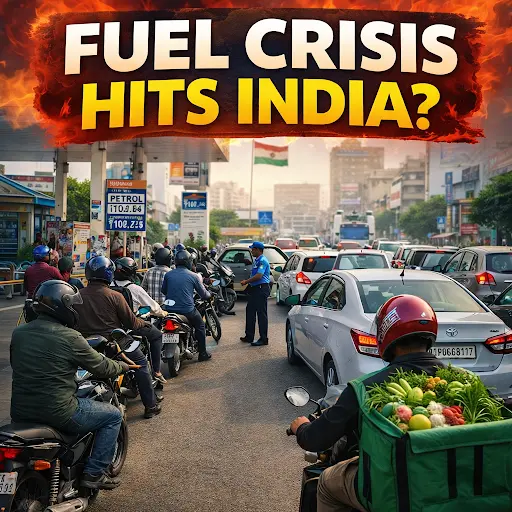
In recent weeks, conversations about a possible fuel or gas crisis have been circulating across India, including in Noida and Greater Noida. News reports, social media posts, and long queues outside gas agencies have raised concerns among residents. But what is actually happening, and how is it affecting daily life?
The situation appears to be a mix of global energy disruptions, local supply adjustments, and public anxiety rather than a full-scale fuel shortage.
Recent geopolitical tensions in West Asia have affected global energy supply routes, particularly the Strait of Hormuz, one of the world’s busiest oil and gas shipping corridors. These disruptions have triggered concerns about LPG availability across several regions of India.
In parts of the Delhi NCR region, including Noida and Greater Noida, reports have emerged of delays in LPG cylinder deliveries and temporary shortages of commercial gas cylinders used by restaurants and street vendors. In some cases, black market prices for commercial cylinders reportedly rose significantly due to restricted supply.
The impact has been visible on the ground. Many residents were seen standing in long queues at gas agencies while waiting for cylinder bookings or deliveries, although authorities say the rush was largely driven by panic and technical booking issues rather than a real depletion of supply.
Government officials have repeatedly clarified that there is no nationwide shortage of petrol, diesel, or LPG, and that India has adequate stocks while supply chains continue to function normally.
However, even the perception of a fuel disruption can affect everyday routines. Small food businesses, tea stalls, and local restaurants that depend on commercial LPG cylinders have reported increased costs and operational challenges.
For residents of Noida and Greater Noida, this situation highlights an important lesson about local supply chains and resilience. When fuel availability fluctuates, logistics and delivery networks become critical. Efficient local sourcing can reduce dependency on long transport routes and ensure essential food items reach households reliably.
This is where platforms like ours become increasingly relevant. By connecting consumers directly with farmers and nearby producers, FarmLokal helps shorten the distance between food production and consumption. Fresh vegetables, dairy products, and groceries can be delivered through online orders within Noida and Greater Noida, reducing the need for multiple transport layers that rely heavily on fuel. And, maybe the fuel prices would increase but prices at FarmLokal are something that you wouldn’t want to miss out on.
While the current fuel concerns appear to be temporary, they remind us how interconnected global energy markets and local food systems are. Strengthening local, transparent, and tech-enabled supply chains ensures that even during periods of uncertainty, households can continue accessing fresh, trustworthy food.
In a rapidly growing urban region like Noida and Greater Noida, resilience often begins with something simple: bringing food closer to the people who need it.